
Part 1: The Pain Her Father Told Her to Hide
My fifteen-year-old daughter finally admitted she had stopped telling her dad when she was in pain because he kept telling her she was only trying to get attention.
The next afternoon, I signed Emily out of school and took her to the hospital without telling my husband, Mark. I thought I was finally getting answers about something he had simply failed to take seriously.
For months, Emily had been moving differently.
She was careful getting out of bed. She picked at dinner. Almost every night, she carried a heating pad into her room and closed the door.
Whenever I asked what was wrong, she insisted she was fine.
I told myself it was cramps. School stress. Being fifteen.
I didn’t understand that she had already learned that admitting she was hurting could get her in trouble.
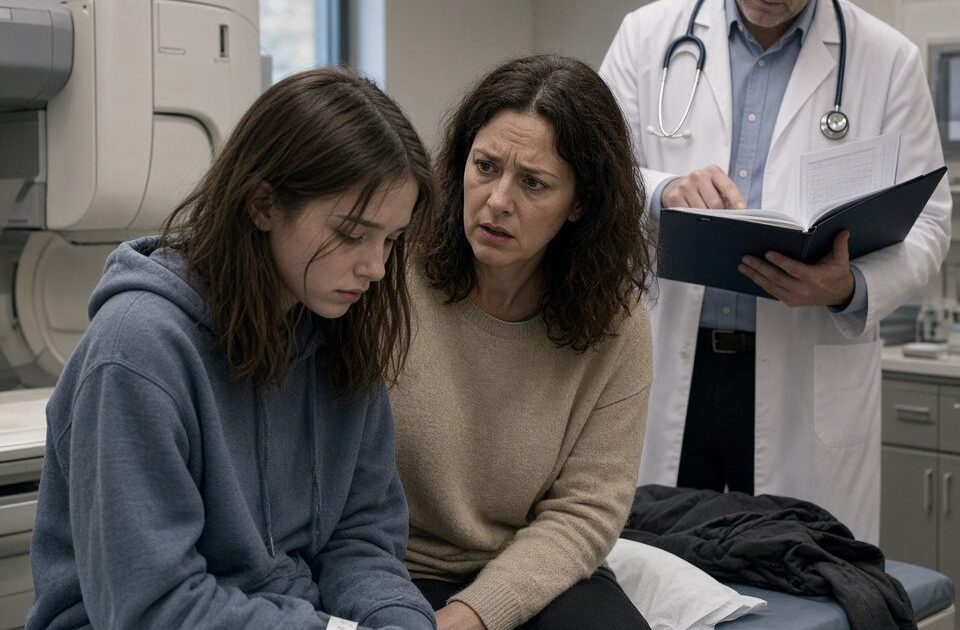
Halfway through her scan, the technician stopped talking.
Not dramatically. Just enough for me to notice.
A few minutes later, a doctor came in, closed the door behind him, and looked directly at me.
“How long has her father known about this?”
My stomach dropped.
“He doesn’t know,” I said. “I didn’t tell him we were coming.”
The doctor glanced at Emily.
“I’m not asking about today.”
He opened her chart and showed me an appointment from five weeks earlier.
Mark was listed as the parent who had brought her in for the same pain.
The discharge plan recommended additional imaging and follow-up.
I turned toward Emily.
“Did Dad take you here before?”
She nodded.
“What did he tell you afterward?”
She pulled her sleeves over her hands.
“He said they didn’t find anything important.”
The doctor explained that what they were seeing now needed prompt attention. He also needed to understand why the earlier recommendation had never been followed.
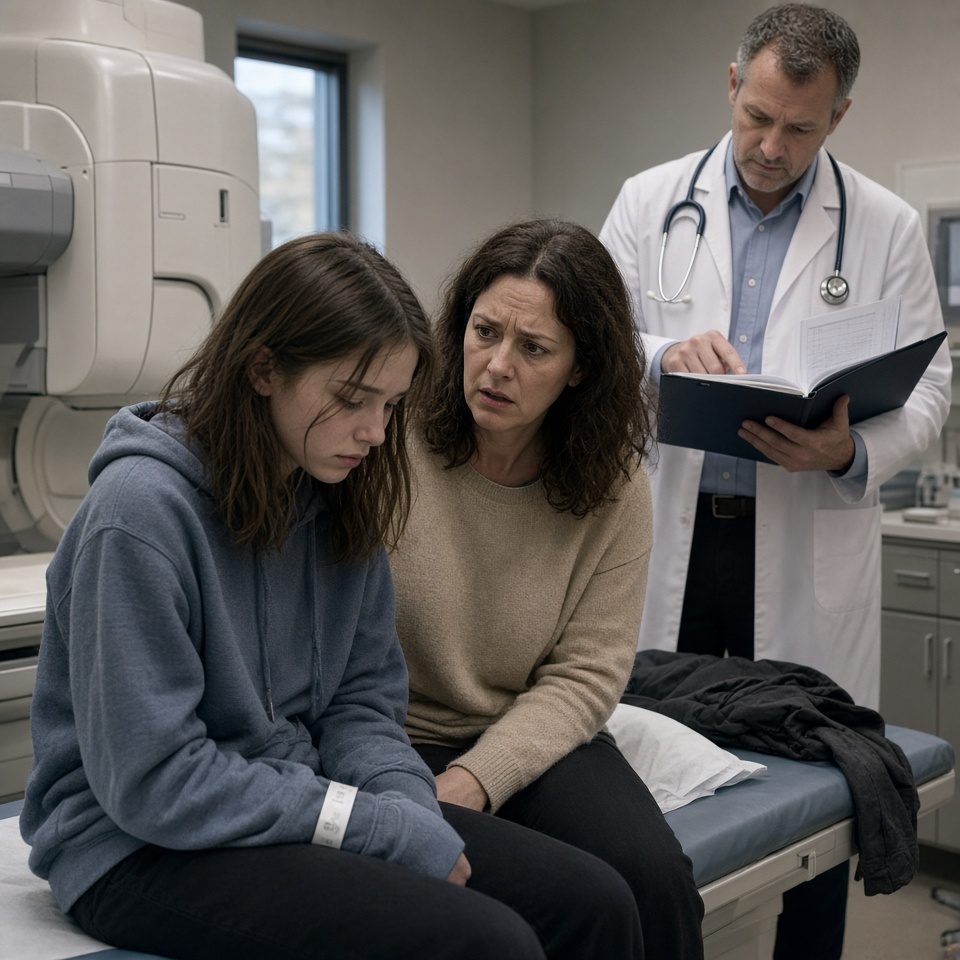
I moved my chair beside Emily.
“You’re not in trouble,” I told her. “I need the truth.”
Her eyes filled.
“Dad got mad after the appointment. He said you were already stressed about money and work, and I was making everything worse.”
I wanted to believe there was some explanation I hadn’t heard.
Maybe Mark had misunderstood.
Maybe he thought she was getting better.
Then the doctor asked, “Did your father tell you not to tell your mother about the follow-up?”
Emily nodded.
That tiny movement destroyed every excuse I had been making for him.
“What exactly did Dad say?”
She looked straight at me.
“He said you already knew.”
I waited.
“He said you agreed with him that I was doing it for attention.”
For five weeks, my daughter had believed both of her parents knew she was hurting and had decided she was exaggerating.
I reached for my phone to call Mark.
Then I stopped.
Whatever explanation he had could wait.
Emily had already waited five weeks for care she needed.
But before we left that room, I would learn that the missed follow-up was only the first thing my husband had kept from me.
Would you keep your child away from the parent who caused the problem, or insist on hearing that parent’s explanation first?
And if a teenager has been taught to hide pain, is protecting the family relationship still worth the risk?
Part 2: The Pain My Daughter Hid from Me
I didn’t call Mark from the hospital.
I called him after Emily was settled into the care plan the doctor recommended.
He answered on the second ring.
“Where are you?”
“With Emily.”
There was a pause.
Then he asked, “Why is she at the hospital?”
I looked through the glass toward my daughter.
“Because you brought her here five weeks ago.”
Silence.
The kind that answers a question before anyone says anything else.
Mark finally said, “I didn’t think it was serious.”
“The doctor says you were given a follow-up recommendation.”
“I know.”
My hand tightened around the phone.
“You knew?”
“I thought it was optional.”
I closed my eyes.
The doctor had already told me the recommendation had been clear. More importantly, Emily had spent five weeks believing that her pain was something she had to hide.
“You told her I agreed she was doing this for attention.”
“I was trying to stop her from worrying you.”
“That isn’t what she heard.”
Mark didn’t answer.
Then he said something that hurt more than the explanation.
“She was getting better.”
I looked at Emily again.
She wasn’t getting better.
She had simply stopped telling us.
That night, I sat beside her hospital bed while she slept.
The next morning, the doctor explained the next steps carefully. He didn’t speculate about Mark’s motives or tell me what our marriage should become. He focused on Emily, the medical follow-up that had been missed, and making sure she understood that reporting pain was never something she needed permission to do.
Later, Mark came to the hospital.
Emily immediately looked at me.
I didn’t make her speak to him.
He stood near the doorway for several seconds before saying, “I’m sorry.”
Emily stared at the blanket.
“You told me Mom thought I was pretending.”
Mark swallowed.
“I shouldn’t have said that.”
“No,” she whispered. “You shouldn’t have.”
He looked at me.
“I was scared.”
“So was she.”
He nodded.
But an apology couldn’t erase five weeks.
It couldn’t undo the appointment he had hidden or the fear he’d put inside a fifteen-year-old girl who had started believing her own pain was an inconvenience.
That afternoon, I made one thing clear to Mark: whatever happened between the two of us, Emily’s medical care would never again depend on whether he personally believed her symptoms were serious.
From then on, appointments, recommendations, and follow-up instructions would be shared openly.
No secrets.
No telling her to stay quiet.
No deciding that pain was attention-seeking because it was inconvenient.
Emily didn’t suddenly become fearless.
She still hesitated sometimes before telling me something hurt.
But now, when she did, I listened.
And I realized the most important thing I could give my daughter wasn’t an explanation for why her father had failed her. It was making sure she never again had to wonder whether she was allowed to ask for help.
Discover more unforgettable stories and truth revelations on our main editorial page.