
Part 1: The Unspoken Rules of Family
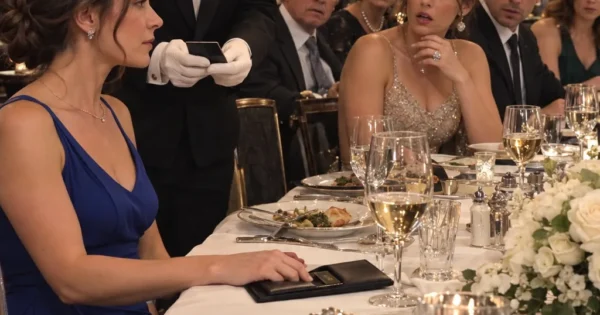
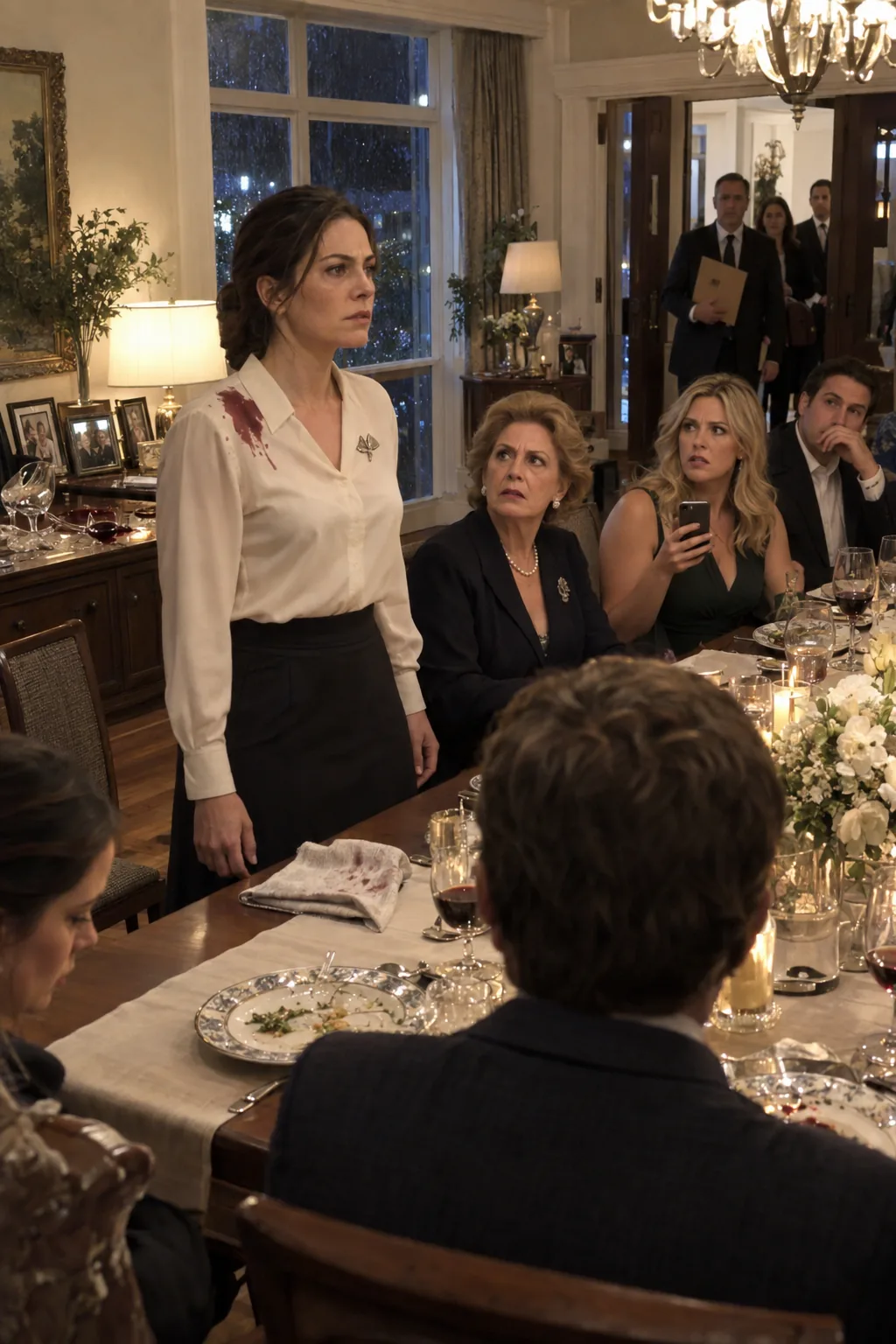
The wineglass broke before anyone could finish laughing. It happened at my mother Anna Rinaldi’s dinner table, in the villa where our family had gathered for a celebration that was supposed to make everyone feel important. Twenty relatives sat beneath the warm dining-room lights. Plates were half-finished. Conversations overlapped. My sister Vera was already holding her phone, looking for something embarrassing enough to record. Then the glass slipped. Red wine spread across the polished oak floor. For one second, nobody moved. My mother did. She pointed at the mess as if I had been hired to clean it. “Get a cloth,” she said. I looked at her, waiting for the joke. There wasn’t one. She reached toward the marble sideboard, grabbed a damp kitchen towel, and threw it at me. It landed against my cream blouse and left a cold red mark near my shoulder. “Clean it,” she repeated. “Or leave my house.” My house. Those two words hurt more than the wine. Because the villa had not belonged to her for years. She simply did not know that. I had bought it quietly after the bank threatened to take it from her. She had called me late one night, crying, saying she had nowhere else to go. I paid the overdue installments, settled the debt, handled the paperwork, and let her continue living there as if nothing had changed. I never told the family. I thought keeping the truth quiet was kinder. Instead, it gave them permission to keep humiliating me. They mocked my old car. They laughed at my inexpensive clothes. They treated my small apartment as proof that I had failed while Vera, who had opened and closed several businesses, was praised for being ambitious. Even the money I had quietly given Vera was forgotten. She had never asked where it came from. She only knew that when things went wrong, somehow Isabella fixed them. That evening, she lifted her phone higher. “Come on, Isa,” she said with a little smile. “Show everyone you can still be useful.” A few cousins looked down. My uncle stopped chewing. Nobody defended me. My mother pointed toward the wine again. “You always make everything difficult.” I stared at the red stain spreading across my blouse. Then I touched the small silver ginkgo-leaf pin at my collar. It had belonged to my grandmother Teresa, the only person in that family who had never measured my worth by what I could provide. My mother noticed it. “Still wearing that cheap little thing?” she asked. I said nothing. For thirty-five years, I had mistaken silence for love. I had paid bills, covered debts, funded vacations, rescued plans, and protected secrets. I had even kept Vera’s struggling business alive long after everyone else had stopped believing in it. And somehow, I was still the family member they expected to obey. My mother folded her arms. “Clean the floor.” Vera aimed the camera at me. “Smile,” she whispered. “Everyone is watching.” I looked around that table. For the first time, I wasn’t searching for a way to make them comfortable. I was asking myself a much harder question: How much of your dignity can you give away before you realize nobody intends to give it back? I bent down. Not to clean. I picked up the broken stem of the glass and placed it safely on the sideboard. Then I stood. The legs of my chair scraped loudly against the oak. My mother’s smile disappeared. “What are you doing?” I folded the damp towel into four neat squares and placed it beside my untouched plate. “No,” I said. She blinked. “No what?” I touched my grandmother’s pin once more. “No, I’m not cleaning this anymore.” My mother laughed nervously, as though I had forgotten who she was. Vera lowered her phone for the first time. Then a car door slammed outside, and three strangers walked toward the front entrance carrying black folders and sealed envelopes.
Part 2: A Lesson in Sacrifice and Love
The front door opened before anyone could ask who was coming. Three people entered carrying black folders and sealed envelopes. They were representatives from the bank and the property management firm that handled the villa. My mother’s face changed. “Who are you?” The woman asked for Anna Rinaldi. “I’m Anna.” “And you must be Isabella Rinaldi.” Vera stopped recording. I nodded. “We’re here regarding the ownership and legal documents connected to this property.” My mother gave a short, confused laugh. “This is my home.” The woman placed a document on the table. “The registered owner is Isabella Rinaldi.” The room went quiet. My mother looked at me as if she had never seen me before. “That isn’t possible.” I placed a second folder beside the first. “It is.” Inside were copies of the purchase agreement, the payments I had made, the debt settlement, and the property registration. I had hidden the truth because I thought she would be happier believing she had kept her home. My mother picked up the first page. “You bought this?” “I did.” “When?” “Seven years ago.” Vera finally spoke. “Why didn’t you tell us?” I looked at her phone. “Because I never wanted money to become the reason you treated me differently.” I continued. “I wanted my mother to have a home. I wanted my sister to have a chance. I thought helping quietly was better than making you feel indebted.” My mother looked at the red stain on my blouse. Then at the damp towel. Then at the broken glass. For the first time that evening, she seemed to understand what she had actually been asking me to do. Not clean wine. Accept the role they had given me. The useful daughter. The quiet daughter. The daughter who paid and apologized. The daughter who could be humiliated because everyone assumed she would return tomorrow. My mother’s voice became smaller. “Isabella, I didn’t know.” “I know.” “Why didn’t you ever tell me?” “Because every time I tried to tell you I was doing something for the family, you told me I was showing off.” I turned toward Vera. “And your business?” Her eyes widened. “What about it?” “The rent for your first shop. The supplier who gave you extra time. The loan payment you couldn’t make last winter.” She went pale. “That was you?” I nodded. “You kept saying you were lucky.” “No,” I said. “You were helped.” Then my mother walked toward me. She stopped a few feet away. “I was cruel to you.” It was the first time she had ever said those words. I did not rush to comfort her. I simply said, “Yes.” “You can be my mother without being my owner.” She nodded. Vera deleted the recording while everyone watched. The representative finished the paperwork and confirmed that the property remained legally mine. Then I made one final decision. My mother could stay, but the rules were changing. No more insults. No more demands. No more pretending that my help was a family obligation. If she wanted to remain in the villa, we would have a written agreement, clear boundaries, and respect on both sides. She agreed. Vera apologized too, though it took her several attempts to say the words. I did not forgive everyone instantly. Forgiveness was not the price of leaving that room with my dignity intact. Before I walked out, my mother looked at the silver ginkgo pin on my collar. “That belonged to your grandmother,” she said. “I know.” “She would have wanted you to stand up for yourself.” “I think she would have.” Then I left the dining room. Outside, the night air was quiet. For once, I did not feel responsible for what everyone inside thought of me anymore. The house had been mine on paper for years, but that night was the first time it felt like mine in every other way too.
Discover more heartwarming stories and emotional moments on our main editorial page.